Key Account Manager para el mercado norteamericano
FEATURE
The car of the future is being designed in Stuttgart
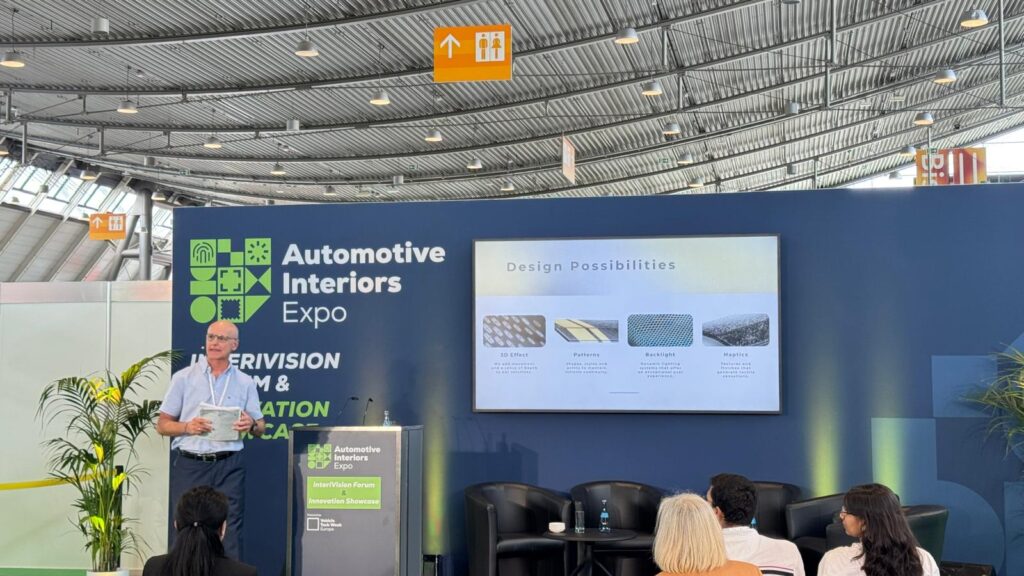
Every year, the automotive industry gathers at Messe Stuttgart to try to read what comes next. This June, Walter Pack was there with three people, an official presentation, a round table and one question hanging over the three days: what remains of the European car when Asia is already in the room?
Some trade fairs confirm what you already know. Others force you to think. Automotive Interiors Expo Europe 2026, held from 23 to 25 June at Messe Stuttgart as part of the newly launched Vehicle Tech Week Europe, belonged firmly to the second group. Not because of the number of exhibitors, which was lower than in November 2024, but because of the quality of the conversations and because of what the presence of around 40% Asian exhibitors said without needing to say it out loud.
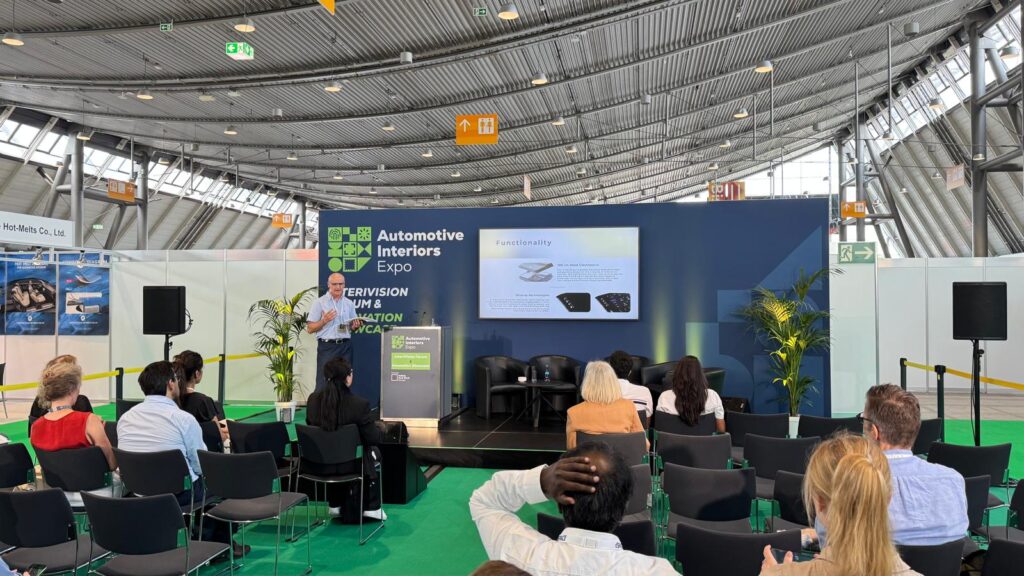
Walter Pack arrived in Stuttgart with its own stand within the ICEX Spain Pavilion, alongside four other Spanish companies, and with three people on site: Joseba Garai, Automotive KAM, who represented the organisation in the fair’s official programme; Sonia López, Color&Trim Leader, who arrived with an eye already sharpened by the Shanghai Motor Show and a packed agenda of meetings with designers from some of the sector’s most relevant brands; and Martha Melo, Sales Engineer, who moved through the fair with a different mission from her colleagues: to observe, map the landscape and return with insights that others may not yet have seen.
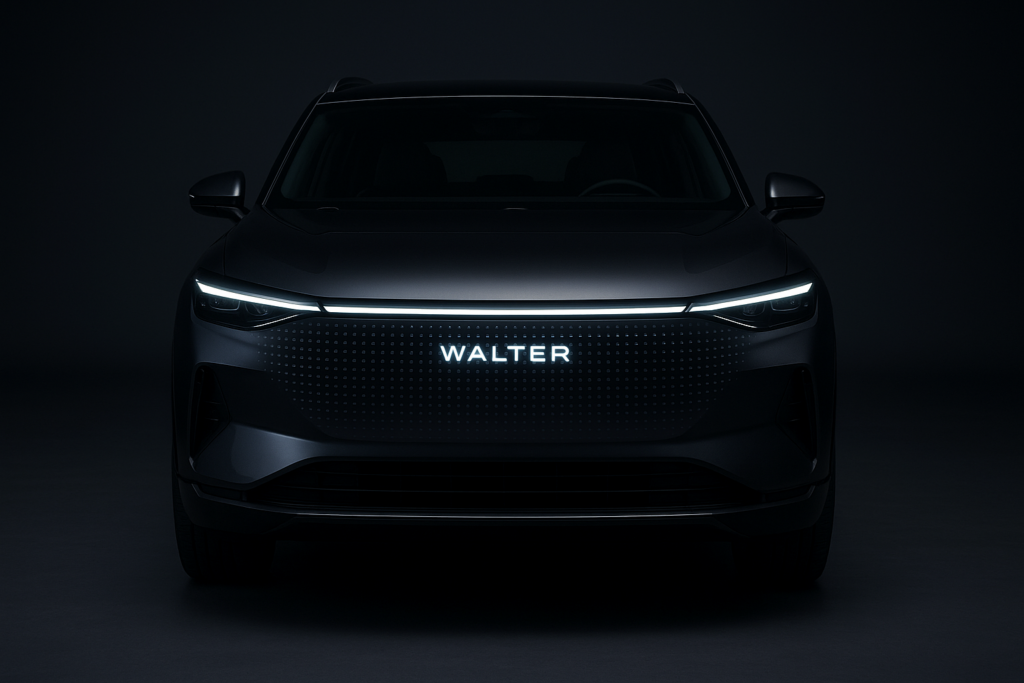
There is something that changes in an electric car which, at first glance, may seem minor but in reality transforms everything: the front end. Without a combustion engine behind it, the front grille loses its original purpose and takes on a far more complex one. It becomes the face of the vehicle, its visual signature, the surface where sensors, lighting, emblems and technology coexist — technology the user’s eye should not necessarily see, but which is there all the same.
Joseba sums up what could be seen in Stuttgart in one clear phrase: “intelligent surfaces that do not look intelligent.”
Sonia adds nuance from a design perspective. Compared with the 2024 edition, what struck her most was the increased sophistication in the use of colour, transparency and lighting effects to give vehicles identity without overloading the design. And compared with what she had seen months earlier in Shanghai, where she had already identified a move towards monochromatic palettes and materials with a more authentic appearance, Stuttgart took the idea one step further.
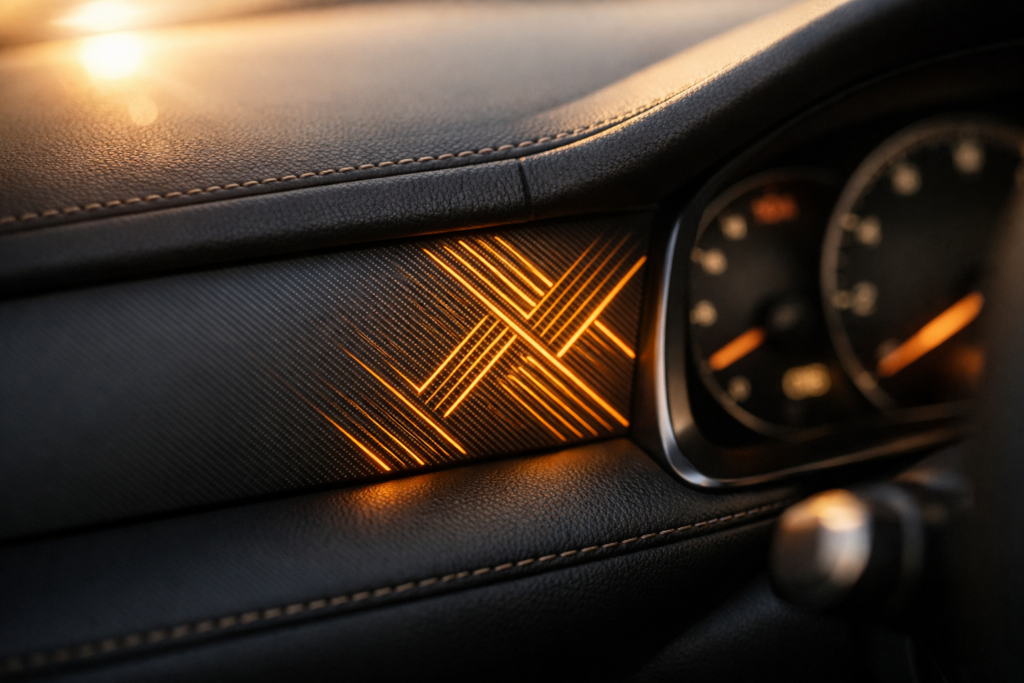
“Material is starting to take on more function,” she explains. “It is no longer only about conveying quality, but about integrating light, transparency, technical effects or interaction.
Sustainability, too, has become more sophisticated. It is no longer something that needs to be loudly announced; it is increasingly built into premium finishes that do not have to declare themselves responsible in order to be so."
Sonia explains
There was a moment that repeated itself several times over the three days, with different people and in different contexts, but always with the same effect. Someone would ask about a finish, a process or a specific technology, and at some point in the conversation they would discover that Walter Pack does not outsource what others subcontract. It does it all in house. Between an idea and a series-production part, there is not a chain of suppliers, but a single organisation.
Sonia puts it simply: “We are able to bring design and technology together to deliver a complete solution.”
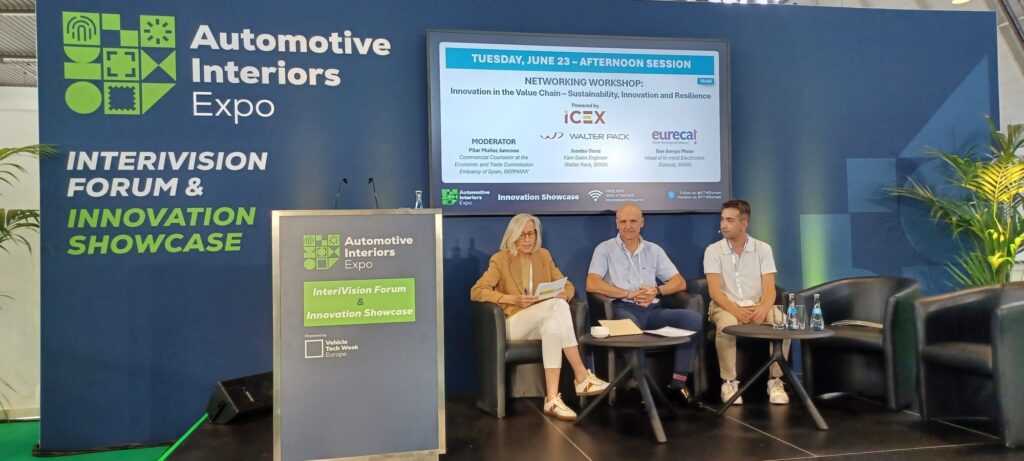
The round table organised by ICEX together with Eurecat on sustainability, innovation and supply chain resilience brought Joseba and Sonia together for an hour to discuss something the sector talks about often but does not always prove: biobased materials, circularity, end-of-life recyclability and the development of 100% polypropylene parts.
“We are working with materials that would have been unthinkable five years ago. The question is no longer whether they are sustainable, but whether we can make them as attractive as conventional materials,” Sonia points out.
The fact that approximately 40% of exhibitors were Asian was not just a statistic; it was a reality. And the figures confirm that this was not simply a perception. In 2025, 19% of electric vehicles sold in Europe came from Chinese factories, and by 2026 that share had already risen to 22%, despite EU tariffs. Chinese manufacturers now account for one in every five electric vehicles in Europe, and analysts at S&P Global estimate that by 2035 their market share will reach 15.5% of the total market, not just the electric segment.
What could be sensed as a trend at an interiors fair has, outside Messe Stuttgart, the weight of hard numbers.
All three agree that the next two or three years will be shaped by the arrival of Asian vehicles and suppliers in Europe, and the composition of the fair already offered a preview of that shift. In design terms, Europe’s response cannot be to compete on visual impact with those who can produce faster and cheaper. It must be to offer identity, perceived quality and a coherent user experience from beginning to end — something that is not so easily replicated.
Martha concludes
“Demand for recyclable solutions is growing, but it still comes up against a cost issue that the sector has not yet solved,”